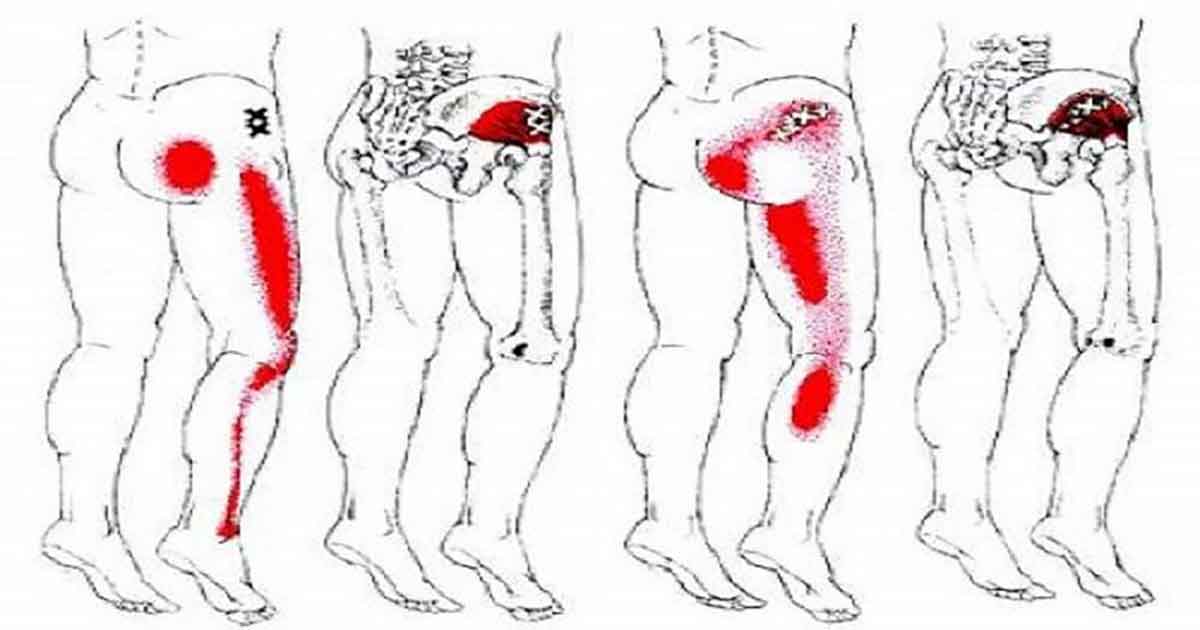
Sciatica is pain that travels from your lower back or buttock down one leg. It can be intense, but the good news is that most cases get better on their own within 4 to 6 weeks. Here is what causes it, what you can do at home, and the warning signs that mean you need help straight away.

Quick answer
- Keep moving. Gentle activity and walking help more than bed rest.
- Ease the pain with heat or cold packs and, if suitable for you, anti-inflammatory painkillers from the pharmacy.
- Stretch gently, stopping if a movement makes leg pain worse.
- Go to the emergency department if you have numbness around your genitals or bottom, problems peeing or controlling your bowels, or weakness in both legs.
What is sciatica?
The sciatic nerve is the longest nerve in the body. It runs from the lower back, through the buttock and down the back of each leg. When something presses on or irritates the nerve roots in the lower spine, you can feel pain anywhere along its path. That is sciatica.
Common symptoms
- pain that runs from the lower back or buttock down one leg, sometimes to the foot
- pain that feels burning, sharp or like an electric shock
- tingling, pins and needles or numbness in the leg or foot
- leg pain that is often worse than back pain
- pain that gets worse when sitting, coughing or sneezing
What causes sciatica?
- A slipped (herniated) disc: the most common cause. The soft centre of a spinal disc bulges out and presses on a nerve root.
- Spinal stenosis: narrowing of the spinal canal, more common in older adults.
- Spondylolisthesis: one vertebra slipping forward over another.
- Muscle tightness in the buttock (sometimes called piriformis syndrome) can cause similar pain.
- Pregnancy can trigger sciatica-like pain because of posture changes and pressure.
Risk goes up with age, being overweight, long periods of sitting, heavy lifting and diabetes.
What helps at home
Stay as active as you can
It is tempting to lie down, but long bed rest tends to slow recovery. Keep doing your daily activities as much as the pain allows, and take short, regular walks. Change position often if you sit for long periods.
Use heat or cold
Some people find a cold pack helps in the first couple of days, and heat (a warm bath or heat pack) helps afterwards. Use whichever feels better, for 15 to 20 minutes at a time, with a cloth between the pack and your skin.
Painkillers
Anti-inflammatory painkillers such as ibuprofen can help some people. They are not suitable for everyone (for example people with stomach ulcers, some heart or kidney conditions, or in pregnancy), so ask a pharmacist first. Paracetamol on its own is not usually effective for sciatica.
Sleep with support
Lying on your side with a pillow between your knees, or on your back with a pillow under your knees, can take pressure off the lower back.
4 gentle stretches for sciatica
Move slowly, breathe deeply and stop if a stretch makes the pain in your leg sharper or spread further down. Mild stretching discomfort in the back or buttock is fine.
1. Knee to chest
Lie on your back with both knees bent. Bring one knee toward your chest and hold it with both hands for 20 to 30 seconds. Switch sides. Repeat 2 to 3 times.
2. Figure-four (buttock) stretch
Lie on your back with knees bent. Cross one ankle over the opposite knee. Gently pull the bottom knee toward your chest until you feel a stretch in the buttock. Hold for 20 to 30 seconds, then switch sides.
3. Lower back rotation
Lie on your back with knees bent and feet flat. Keeping your shoulders on the floor, slowly let both knees fall to one side, hold for 5 to 10 seconds, then to the other side. Repeat 5 times each way.
4. Pelvic tilt
Lie on your back with knees bent. Tighten your stomach muscles and gently flatten your lower back into the floor. Hold for 5 seconds, relax, and repeat 10 times.
Treatments a doctor may suggest
- Physiotherapy: an exercise programme tailored to you is one of the most effective treatments.
- Prescription medication for nerve pain, in some cases.
- Steroid injections near the irritated nerve, for severe pain that is not improving.
- Surgery, only for a small number of people with severe or worsening symptoms that have not improved with other treatments.
Some people also find massage or manual therapy (such as from an osteopath or chiropractor) helpful alongside exercise. Choose a registered practitioner and tell them about any health conditions.
When to see a doctor
Book an appointment if:
- the pain has not started to improve after a few weeks
- the pain is getting worse or stopping you from doing normal activities
- you have numbness or weakness in one leg or foot
Go to the emergency department straight away if you have:
- numbness around your genitals, bottom or inner thighs
- problems peeing, loss of bladder control or loss of bowel control
- weakness or numbness in both legs, or legs that are getting weaker
- back pain with a high temperature, unexplained weight loss, or after a serious fall or accident
The first three can be signs of cauda equina syndrome, a rare but serious condition where the nerves at the bottom of the spine are compressed. It needs emergency treatment to prevent permanent damage.
Frequently asked questions
How long does sciatica last?
Most people improve within 4 to 6 weeks. For some it lasts longer, and it can come back. Staying active and strengthening your back and core muscles can lower the chance of it returning.
Is walking good for sciatica?
Yes. Short, regular walks are usually one of the best things you can do. Start with what is comfortable and build up gradually.
Should I rest in bed?
Not for long. A day or two of taking it easy is fine if the pain is severe, but long bed rest tends to make recovery slower.
Can sciatica affect both legs?
Sciatica usually affects one leg. Pain, numbness or weakness in both legs needs prompt medical attention.
This article is for general information and does not replace advice from your doctor or physiotherapist. Last reviewed: November 2026.
Sources
- Mayo Clinic: Sciatica, symptoms and causes
- Mayo Clinic News Network: What is sciatic pain and how is it usually treated?
- University Hospitals Coventry & Warwickshire (NHS): Sciatica self-care
- Sussex Community NHS: Cauda equina syndrome
- MSK Dorset (NHS): Back pain and leg pain (sciatica)
Some doctors recommend following exercises as extremely helpful: