Finding a lump behind your ear, on your neck or on your back can be worrying. The reassuring news is that most of these lumps are harmless: usually a swollen lymph node fighting an infection, a cyst or a fatty lump. Here is how to tell the common causes apart, and the signs that mean you should see a doctor.
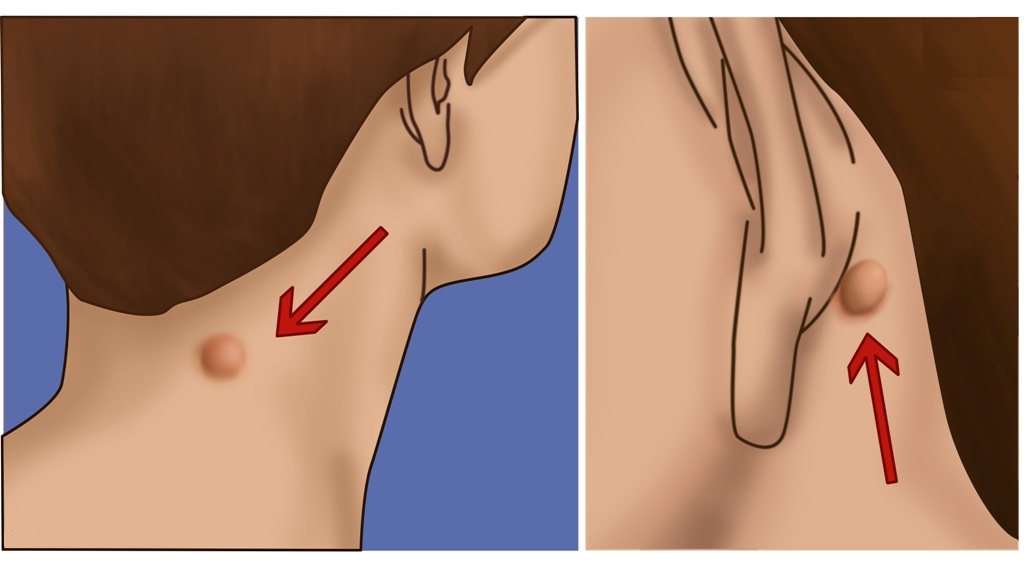
Quick answer
- Most common cause: a swollen lymph node (“gland”) after a cold, sore throat, ear or skin infection. It usually goes down within 2 weeks.
- Other common causes: skin cysts, lipomas (soft fatty lumps) and acne spots.
- See a doctor if a lump lasts longer than 2 to 3 weeks, keeps growing, feels hard and fixed, or comes with fever, night sweats or weight loss.
Common causes of a lump behind the ear or on the neck
1. Swollen lymph nodes
Lymph nodes are small, bean-shaped glands that help your body fight infection. There are groups of them behind the ears, under the jaw and along the neck. When you have an infection nearby, they swell and can feel tender.
- Typical triggers: colds, flu, sore throat, tonsillitis, ear infections, dental problems, scalp or skin infections.
- How they feel: soft or rubbery, slightly tender, and they move a little under the skin.
- What to do: they usually go down on their own as the infection clears, often within 2 weeks.
2. Skin cysts (epidermoid or sebaceous cysts)
A cyst is a small, round sac under the skin, filled with a soft, cheesy material. Cysts are usually painless, grow slowly and may have a tiny dark dot in the middle. They are harmless, but they can become red, sore and swollen if infected. Do not squeeze them; a doctor can drain or remove one that causes problems.
3. Lipomas
A lipoma is a soft, doughy lump of fat that moves easily when pressed. Lipomas are common on the neck, shoulders and back, grow very slowly and are almost always harmless. They can be removed if they bother you.
4. Acne and boils
Painful red lumps along the hairline, neck or back are often deep acne spots or boils (infected hair follicles). Warm compresses can help. See a doctor if a boil is large, very painful or you have a fever.
5. Mastoiditis (rare)
An infection of the bone just behind the ear, usually after an ear infection. It causes a red, painful swelling behind the ear, sometimes pushing the ear forward, along with fever. It needs prompt medical treatment.
6. Less common causes
Salivary gland swellings, thyroid lumps (at the front of the neck) and, rarely, cancers such as lymphoma or head and neck cancers can also cause lumps. This is why a lump that does not go away should always be checked.
When to see a doctor
Make an appointment if a lump:
- has not gone down after 2 to 3 weeks
- keeps getting bigger
- feels hard, does not move when you push it, or is painless and growing
- appears with unexplained weight loss, night sweats or a fever that keeps coming back
- comes with a hoarse voice, trouble swallowing, or a mouth ulcer that will not heal for more than 3 weeks
Get medical help quickly if a lump is red, hot and very painful, if you have a high fever, or if you have difficulty breathing or swallowing.
What to expect at the doctor
A doctor will ask how long you have had the lump and about recent illnesses, then examine it. Often no tests are needed. If the cause is unclear, they may suggest blood tests, an ultrasound scan, or a small sample of tissue (biopsy).
Frequently asked questions
Is a lump behind the ear usually cancer?
No. The vast majority are swollen lymph nodes, cysts or lipomas. A lump that lasts more than a few weeks or keeps growing should still be checked to be sure.
How long do swollen lymph nodes last?
Usually up to 2 weeks after an infection, sometimes a little longer. A small, soft node that stays the same size for a long time is often normal, but ask your doctor if you are unsure.
Should I squeeze or pop a lump?
No. Squeezing can push infection deeper and cause scarring. Let a doctor drain or remove it if needed.
Can stress cause lumps on the neck?
Stress itself does not cause lumps, but it can make you more likely to catch infections, which can make lymph nodes swell.
This article is for general information and does not replace advice from your doctor. Last reviewed: November 2026.
Sources
- Cleveland Clinic: Swollen lymph nodes
- Cleveland Clinic: Lymph nodes in the neck
- MedlinePlus: Neck lump
- NHS 111 Wales: Swollen glands
- The Royal Marsden (NHS): Signs of head and neck cancer you shouldn’t ignore