Pressing on certain spots on your head, neck and hands is a simple, free way to try to ease a tension headache. Research on acupressure is still limited, but gentle massage of tight muscles often feels relieving and is safe for most people. Here are five points to try, what else helps, and when a headache needs a doctor.
Quick answer
- Try: the base of the skull, the temples, between the eyebrows, the top of the shoulders and the web between thumb and index finger.
- How: firm but comfortable pressure in small circles for 1 to 2 minutes, while breathing slowly.
- Best for: tension headaches, the common “tight band around the head” type.
- Get urgent help for a sudden, extremely severe headache, or a headache with fever and stiff neck, confusion, weakness or problems speaking or seeing.
Does acupressure work for headaches?
Acupressure comes from traditional Chinese medicine and uses the same points as acupuncture, but with finger pressure instead of needles. The scientific evidence is mixed: some small studies suggest it can reduce headache pain, but larger, high-quality trials are lacking. Acupuncture itself has better evidence for preventing frequent tension headaches and migraines.
What is clear is that tension headaches are often linked to tight muscles in the neck, shoulders and scalp, and massaging those muscles, relaxing and breathing slowly can help many people feel better. It is safe to try, as long as you also know when a headache needs medical attention.
How to press a pressure point
- Sit or lie down comfortably and relax your shoulders.
- Use your fingertips or thumb to apply firm, steady pressure. It should feel strong but not painful.
- Massage in small circles for 1 to 2 minutes, breathing slowly and deeply.
- Repeat on the other side where there are two points.
5 pressure points to try
1. Base of the skull (GB20, “Feng Chi”)
Where: at the back of your head, in the two hollows on either side of the spine where your neck muscles attach to the skull.
How: place your thumbs in the hollows, tilt your head back slightly and press upward. This area is often tight in tension headaches and after long screen work.
2. Temples (“Taiyang”)
Where: in the soft spot about a finger’s width behind the outer end of each eyebrow.
How: use gentle circular pressure with your index and middle fingers on both sides at once.
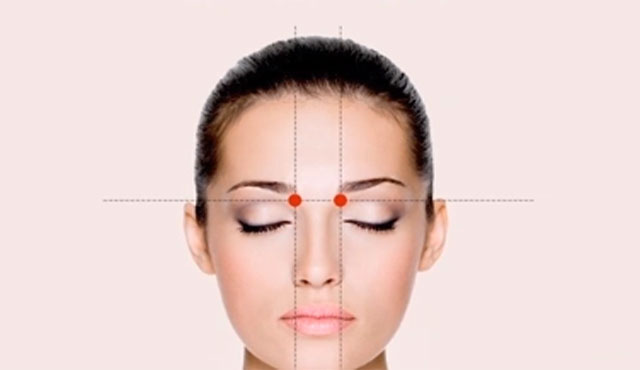
3. Between the eyebrows (“Yintang”)
Where: where the bridge of your nose meets your forehead.
How: press gently with one finger or massage in small circles. Often used for headaches around the forehead and eyes.
4. Top of the shoulders (GB21, “Jian Jing”)
Where: halfway between the base of your neck and the tip of your shoulder, on the muscle you would grip for a shoulder massage.
How: squeeze and knead the muscle with the opposite hand. Many tension headaches start with tightness here.
5. Web of the hand (LI4, “He Gu”)
Where: on the back of your hand, in the fleshy area between your thumb and index finger.
How: pinch the area with the thumb and index finger of your other hand and press firmly. Switch hands.
Note: traditional practice advises avoiding strong pressure on this point during pregnancy. If you are pregnant, skip it.
Other things that help a tension headache
- Drink water and have a light snack if you have skipped a meal.
- Apply heat or cold: a warm towel on the neck and shoulders, or a cool pack on the forehead.
- Take a screen break and check your posture. Raise your screen to eye level.
- Move: a short walk and gentle neck stretches release muscle tension.
- Sleep regularly and manage stress with relaxation or breathing exercises.
- Painkillers such as paracetamol or ibuprofen can help occasional headaches. Avoid using them on more than 2 or 3 days a week, because frequent use can cause “medication overuse headaches”.
When to see a doctor
Make an appointment if:
- you get headaches often, or they are getting worse
- painkillers do not help or you need them several days a week
- you are over 50 and have a new type of headache
- headaches wake you up, or are worse when you cough, sneeze or bend down
Call emergency services if a headache:
- starts suddenly and is extremely painful (the worst headache of your life)
- comes with a high temperature, stiff neck or a rash
- comes with confusion, weakness, numbness, slurred speech or loss of vision
- follows a head injury
Frequently asked questions
How long should I press a pressure point?
About 1 to 2 minutes per point, and you can repeat a few times. Stop if it becomes painful.
Do pressure points work for migraines?
Some people find them soothing during a migraine, but migraines usually need a different approach, such as specific migraine medication and avoiding triggers. Talk to your doctor if you have regular migraines.
Can I use pressure points with painkillers?
Yes. Acupressure and massage can be used alongside normal headache treatment.
This article is for general information and does not replace advice from your doctor. Last reviewed: November 2026.
Sources
- NHS: Tension headaches
- Mayo Clinic: Tension-type headaches, self-care measures for relief
- Acupoints for tension-type headache: a literature study
- Efficacy of acupuncture for tension-type headache: a literature review